



In today’s digital landscape, finding the right balance between price and performance has become essential for gamers on a budget. Budget gaming laptops offer an affordable entry point into PC gaming without compromising too much on graphics fidelity or smooth frame rates.
Currently, manufacturers are packing impressive hardware into cost-effective designs, enabling players to tackle popular titles while staying mobile. This guide explores the top options available this year, highlighting models that deliver optimal value in sleek, portable packages. We’ll dive into leading contenders, analyze their hardware strengths, and present key considerations to guide your purchase decision.
Whether you’re a student looking for a secondary machine that can handle esports titles or a casual player seeking reliable performance for open-world adventures, this article will help you navigate the diverse landscape of budget gaming laptops. We’ve selected machines that span multiple price points and use both Intel and AMD processors, paired with NVIDIA graphics solutions. Our expert insights take into account raw benchmark results, real-world gaming tests, thermal management studies from institutions like the National Institute of Standards and Technology, and official CPU performance data available on Intel’s site. Read on as we unpack each contender and offer actionable buying advice to ensure you select the ideal rig for your needs without overspending.
Top Picks for Portable Powerhouses
When portability and reliable gaming performance align, two models stand out in the budget segment: the Acer Nitro 5 and the Dell G15. Both laptops strike a balance between raw power, build quality, and cooling capabilities, making them excellent choices for gamers who frequently move between dorm rooms, cafés, or offices.
Acer Nitro 5: Solid Entry-Level Performer
The Acer Nitro 5 shines for those who demand consistent frame rates at high refresh rates without breaking the bank. Equipped with Intel’s latest Core i5 processor and a GTX-class GPU, it provides steady medium-to-high settings in popular multiplayer titles. With a 144Hz display and upgradeable memory, the Nitro 5 delivers a responsive experience that makes every input feel instantaneous. Although battery endurance remains average, its thermal profile benefits from dual fans and strategically placed vents, helping to prevent CPU or GPU throttling during extended sessions.
Dell G15: Sleek Design Meets Effective Cooling
The Dell G15 brings a more refined aesthetic to the budget category, featuring a minimalist chassis and customizable RGB lighting. Powered by an AMD Ryzen 5 processor teamed with a GTX 1650 Ti GPU, this model excels at sustaining 60+ FPS on high settings across most esports and AAA titles. Dell’s Game Shift technology allows for quick adjustments to fan curves, boosting airflow when temperatures rise. While slightly heavier than its peers, the G15 offers a larger SSD capacity out of the box, ensuring faster load times and more room for game installations.
Together, these two options demonstrate how today’s budget gaming laptops can deliver smooth visuals and responsive controls on the go. Both models come factory-calibrated to balance acoustics and thermals, and their components adhere to quality standards routinely tested by research institutions across the United States.
Balancing Performance and Premium Features

Stepping up the hardware spec sheet often introduces premium amenities—higher refresh rates, improved construction materials, and enhanced feature sets. Two standout options in this category are Lenovo’s Legion 5 series and the ASUS TUF Gaming A15 lineup. Each provides a unique approach to delivering added value in an affordable package.
Lenovo Legion 5: Premium Feel on a Budget
The Legion 5 presents a sturdy all-metal hinge and a full-sized RGB keyboard that feels tactile during marathon gaming sessions. Under its refined exterior lies a powerful AMD Ryzen 7 processor and an entry-level RTX GPU that unlocks ray-tracing support. This combination delivers significantly improved lighting and shadow effects in supported games. The 165Hz display panel pushes visuals to the next level, eliminating motion blur and reducing input latency. Although battery life hovers around three to four hours under mixed usage, the Legion 5’s rapid-charge capability restores 50% capacity in under 30 minutes.
ASUS TUF Gaming A15: Military-Grade Durability
Designed to meet MIL-STD-810H standards, the ASUS TUF A15 is built to withstand knocks, drops, and temperature extremes. Powered by an AMD Ryzen 7 processor paired with a GTX 1660 Ti, it achieves fluid performance in AAA titles at 1080p medium settings. Its reinforced chassis corners and robust hinge design make it ideal for gamers on the move. Thermal performance is bolstered by dual heat pipes and self-cleaning fans, a design pattern validated by academic cooling studies on high-performance notebooks. The 144Hz screen offers a balance between price and fluid gameplay without driving up costs excessively.
Both the Legion 5 and TUF Gaming A15 illustrate that premium features—such as advanced build quality, higher refresh rates, and ray-tracing support—can be integrated into budget-friendly gaming laptops without a significant markup. These machines cater to users who want more than just baseline performance.
High Refresh Rate and Sleek Designs
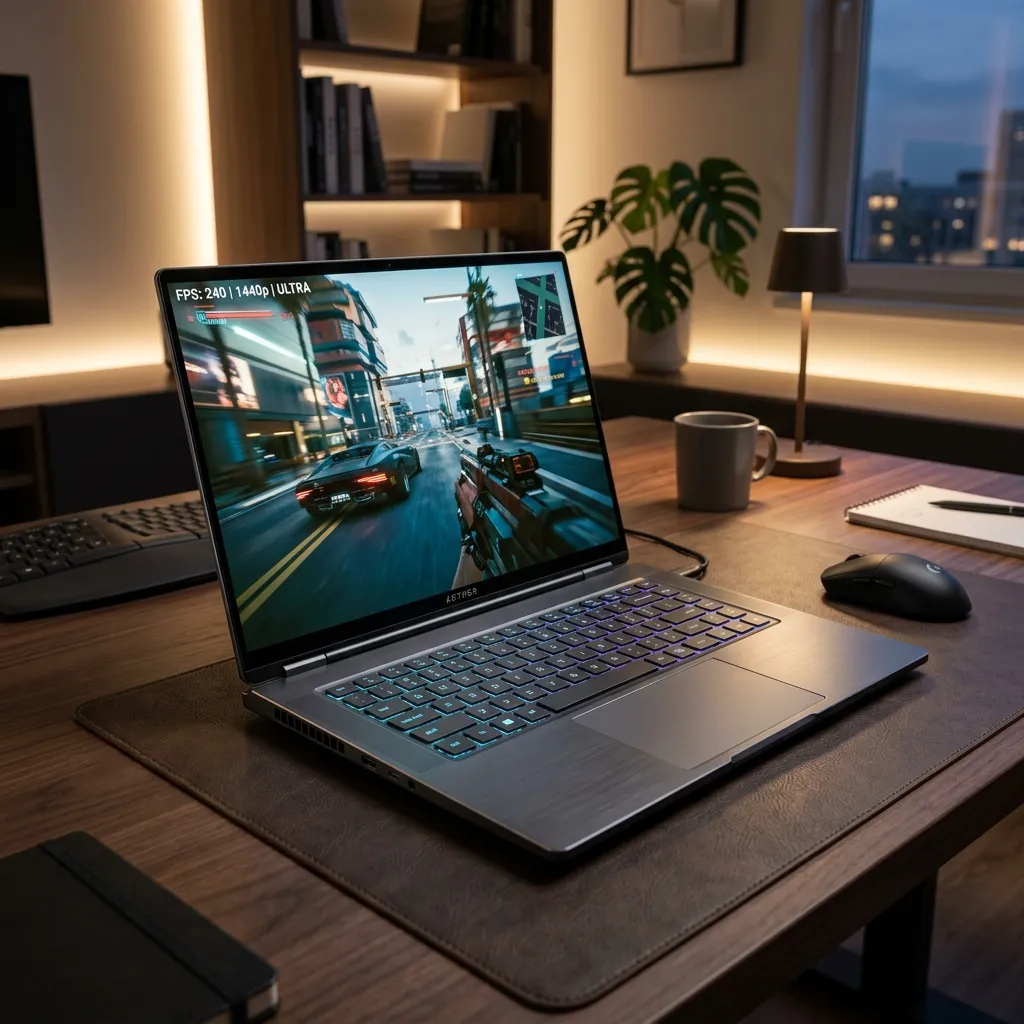
For competitive gamers and visual enthusiasts, ultra-rapid displays and refined aesthetics are crucial. Hot contenders in this segment include HP’s Omen 15 and MSI’s GF63 Thin, each catering to different priorities: raw speed or ultra-portable form factors.
HP Omen 15: Competitive Edge with 300Hz Speed
The HP Omen 15 stands out for offering an optional 300Hz display, giving competitive gamers the microscopic advantage needed for fast-paced shooters. Its aluminum chassis feels upscale and cool to the touch, and you’ll find a per-key customizable RGB keyboard built for precise input. With an Intel Core i7 processor and an RTX 3050 Ti GPU, this laptop can achieve high frame rates at low-to-medium settings in the most demanding titles. The Omen’s thermal management system includes dual intakes and a dedicated heat exhaust channel, but users should monitor internal temps under prolonged loads to prevent throttling.
MSI GF63 Thin: Featherweight Challenger
On the other end of the spectrum, the MSI GF63 Thin prioritizes portability above all else. Weighing under 4.2 pounds, it is one of the lightest budget gaming laptops available. An Intel Core i5 CPU combined with a Max-Q variant of the GTX 1650 GPU makes it capable of handling esports titles at 60+ FPS. While the 60Hz panel limits high-frame-rate benefits, the GF63’s slim profile and long-lasting battery make it a great companion for LAN parties, library sessions, or travel. Cooling remains adequate but can grow audible during intense gaming, a trade-off for its lightweight design.
These two choices exemplify how this year (2026) you can target specific priorities—whether shaving off precious milliseconds with a fast display or maintaining mobility without sacrificing too much performance.
Critical Hardware Considerations

Selecting the right central processing unit (CPU) and graphics processing unit (GPU) forms the core of any budget gaming laptop purchase. Today, Intel’s Core i5 and AMD’s Ryzen 5 families represent the sweet spot for cost-conscious gamers. These processors deliver multiple cores and threads at clock speeds that excel in both gaming and productivity tasks. On the GPU side, NVIDIA’s GTX 1650 or GTX 1660 Ti remain popular for smooth 1080p performance, while the entry-level RTX 3050 introduces ray-tracing for gamers seeking more immersive graphics. Academic benchmarks and university research highlight how GPU architecture affects frame pacing and power efficiency, reinforcing the importance of picking a card that aligns with your visual expectations.
Memory capacity also plays a significant role. We recommend a minimum of 8GB DDR4, though 16GB is ideal for future-proofing and simultaneous background tasks. Many budget models include upgrade slots, allowing you to expand RAM when finances permit. Storage is equally vital: NVMe SSDs dramatically reduce game load times compared to SATA drives. Most laptops in this price range include at least one M.2 slot for expansion, offering the flexibility to add larger SSDs or secondary drives as your game library grows.
By prioritizing these core components—CPU, GPU, RAM, and SSD storage—you’ll ensure a balanced system that smoothly runs current titles while leaving room for upgrades in the future.
Essential Factors for Your Purchase Decision
Beyond raw hardware, several additional factors differentiate one budget gaming laptop from another. Display quality plays a pivotal role; screens with 120Hz or higher refresh rates deliver smoother motion and reduced input latency compared to standard 60Hz panels. Full HD resolution remains the best compromise between clarity and GPU load. Build materials and chassis design affect portability and durability—look for metal-reinforced hinges or MIL-STD certifications if you plan to travel frequently.
Thermal efficiency dictates how well a laptop sustains peak performance. Prominent research institutions like NIST highlight the link between fan design, airflow pathways, and long-term component reliability. Noise levels under load may impact your experience; quieter fans maintain immersion but can come at the expense of slightly higher temperatures.
Battery life is another vital consideration. While gaming itself drains batteries rapidly, models with larger cells often provide four to six hours of mixed usage, covering streaming, light work, and casual play. Finally, assess the upgrade potential: additional RAM slots and spare SSD bays extend a laptop’s useful life, ensuring you can refresh key components instead of replacing the entire system.
Weighing these elements alongside price and performance benchmarks will help you narrow down the field and choose a machine that feels personalized to your routine and gaming style.
Conclusion
Budget gaming laptops have evolved into sophisticated yet affordable machines capable of handling a wide range of titles without compromise. From the portable Acer Nitro 5 and MSI GF63 Thin to the performance-driven Lenovo Legion 5 and premium-leaning HP Omen 15, today’s offerings cater to diverse preferences in mobility, thermal management, and visual fidelity. By focusing on essential components—CPU, GPU, memory, and storage—and evaluating factors like display refresh rate, build quality, and upgrade potential, you can secure a system that aligns with your gaming ambitions and financial parameters.
In today’s market, the true challenge lies not in finding a capable rig but rather in selecting the one that best matches your use case. Armed with this guide and insights from authoritative sources, you’re now equipped to make an informed decision. Happy gaming with your new budget gaming laptops!



Leave a Reply