


Wireless earbuds are compact, Bluetooth-enabled devices offering convenience, portability, and features like noise cancellation and long battery life, making them ideal for music, calls, workouts, and everyday use.
In today’s digital landscape, wireless earbuds have become indispensable accessories for music lovers, remote workers, and fitness enthusiasts alike. Over the past few years, rapid innovations in audio engineering and wireless connectivity have pushed true wireless in-ear devices to new heights. This year, leading manufacturers continue to refine sound quality, improve active noise cancellation (ANC), extend battery life, and prioritize ergonomic comfort. Whether you’re attending virtual meetings, commuting on busy transit lines, or powering through a high-intensity workout, the right pair of wireless earbuds can transform your listening experience and boost productivity.
In this comprehensive guide, we’ll explore how modern earbuds evolved, provide detailed reviews of six standout models, compare their key specifications side by side, and offer expert advice on selecting the perfect match for your lifestyle. Additionally, we’ll examine maintenance tips, firmware updates, and safe listening practices recommended by authoritative sources such as the National Institute on Deafness and Other Communication Disorders (NIDCD) and Bluetooth SIG (Bluetooth.com). By the end of this article, you’ll have all the insights needed to make an informed decision and enjoy premium audio performance wherever you go.
The Evolution of Wireless Earbuds
Early iterations of wireless earbuds focused primarily on convenience, offering users a cable-free experience but often sacrificing audio fidelity and connectivity stability. Today, manufacturers leverage advanced Bluetooth codecs, precision-tuned drivers, and powerful digital signal processors to deliver studio-quality sound in a compact form factor. Active noise cancellation (ANC), once exclusive to over-ear headphones, is now a standard feature in many in-ear models, enabling listeners to block out environmental distractions—from roaring airplane engines to crowded coffee shops—and immerse themselves in music or calls.
Battery technology has also seen major strides. Lithium-ion microcells and optimized power management protocols now allow certain earbuds to provide up to eight hours of continuous playback on a single charge, with charging cases extending total uptime to over 30 hours. Fast-charge support delivers one hour of listening after just five minutes in the case, ensuring you’re never without music when you need it most.
Comfort and fit are equally important in today’s offerings. Manufacturers employ customizable ear tips, wing-tip stabilizers, and adjustable lightweight housings to accommodate a range of ear anatomies. Sweat and water resistance ratings such as IPX4 and IPX7 assure users that their earbuds can withstand intense workouts or sudden showers without skipping a beat. Unified companion apps give users the ability to fine-tune equalizer settings and noise cancellation levels, further personalizing the listening experience.
As wireless earbuds become smarter, features like multipoint Bluetooth pairing, touch-sensitive controls, voice-assistant integration, and seamless ecosystem connectivity ensure they adapt to users’ multi-device lives. In today’s fast-paced world, these advancements make it easier than ever to stay connected and entertained on the move.
In-Depth Reviews of Top Six Models
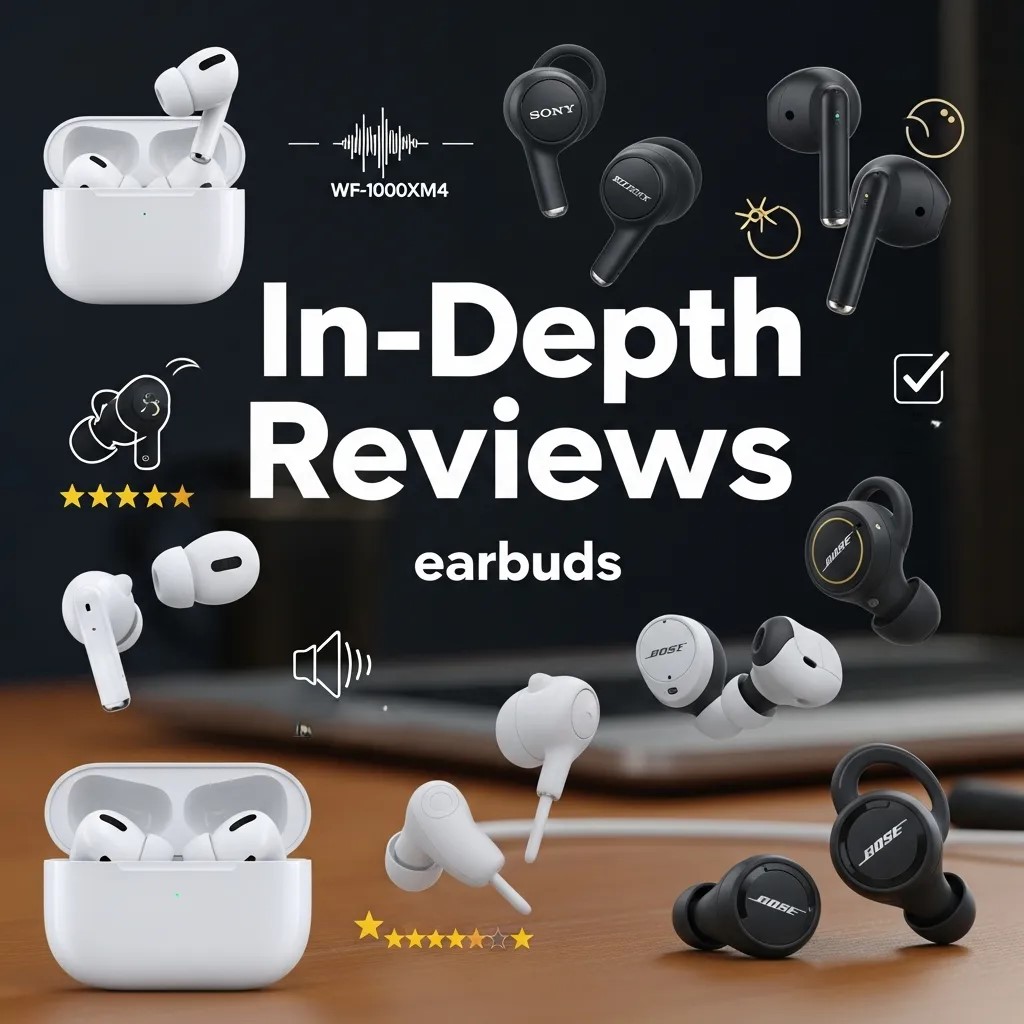
Apple AirPods Pro (2nd Gen)
The Apple AirPods Pro (2nd Gen) elevate the brand’s signature true wireless design with the custom H2 chip, delivering best-in-class ANC and personalized Spatial Audio. Users benefit from adaptive transparency, which automatically balances background noise reduction with environmental awareness. Battery life stands at up to 6 hours per earbud, with a total of 30 hours including the MagSafe charging case. Tight integration within the Apple ecosystem means seamless setup, automatic device switching, and hands-free Siri control. While the premium price may deter budget-minded buyers, iPhone and iPad users gain unrivaled compatibility and performance.
Sony WF-1000XM4
Sony’s WF-1000XM4 earbuds remain industry benchmarks for ANC and high-resolution audio. Featuring the Integrated Processor V1 and newly designed 6mm drivers, these buds deliver deep bass, clear mids, and detailed highs. Battery life reaches 8 hours on a single charge and 24 hours with the charging case. Support for LDAC, AAC, and SBC codecs ensures the best possible sound quality on compatible Android devices. The Sony Headphones Connect app allows users to customize EQ, noise-cancellation strength, and touch controls. IPX4 water resistance and Qi-wireless charging add to the package’s versatility.
Samsung Galaxy Buds2 Pro
Optimized for Galaxy smartphones and tablets, the Samsung Galaxy Buds2 Pro feature intelligent noise control and 360 Audio for immersive spatial sound. Each bud delivers up to 5 hours of playback, with an 18-hour case-assisted total. IPX7 water resistance qualifies them for sweaty workouts and rainy commutes. Bluetooth 5.3 connectivity provides low latency for video calls and gaming, while active voice amplification ensures clear communication in noisy environments. Non-Galaxy users can still enjoy high-fidelity audio and noise cancellation but may miss out on certain integration features.
Jabra Elite 7 Pro
Designed with call clarity in mind, the Jabra Elite 7 Pro incorporates four high-definition microphones and bone-conduction technology for superior voice pickup. Adjustable ANC and MyControls modes allow fine-tuning of ambient sound. With up to 8 hours of battery life per charge and 35 hours total with the case, these earbuds excel for long workdays and international travel. IP57 dust and water resistance guarantee durability in challenging conditions. Bluetooth multipoint support lets users connect two devices simultaneously for effortless switching between phone calls and media playback.
Bose QuietComfort Earbuds II
Bose continues its legacy of noise cancellation excellence with the QuietComfort Earbuds II. Featuring custom-tuned acoustic diaphragms and adaptive noise-cancelling algorithms, these buds deliver immersive audio with a balanced sound signature. Users can expect 6 hours of listening on a charge and 24 hours total with the charging case. The Bose Music app allows users to create a custom Quiet mode based on their listening preferences. Though the charging case is bulkier than some competitors, the comfort and noise-cancellation performance justify the higher price tag for frequent travelers and audiophiles.
Anker Soundcore Liberty Air 2 Pro
Offering remarkable value, the Anker Soundcore Liberty Air 2 Pro includes four ANC modes, wireless charging, and HearID personalized EQ at a budget-friendly price. Each earbud provides up to 7 hours of playback, extending to 26 hours with the case. Soundcore’s HearID test measures ear canal acoustics to generate a custom EQ profile, ensuring music sounds its best. Bluetooth 5.0 ensures stable connectivity, while IPX4 water resistance covers daily workouts. Though ANC performance trails behind flagship models and the companion app could be more intuitive, these earbuds deliver pro-level features on a budget.
Comparative Analysis of Key Specifications
Choosing the right wireless earbuds requires understanding how each specification impacts real-world performance. Let’s break down the most crucial factors:
Battery Life and Charging
Battery longevity determines how long you can listen between charges. Models like the Jabra Elite 7 Pro and Anker Liberty Air 2 Pro excel with 35 and 26 hours total runtime, respectively. Apple and Bose deliver moderate totals (30 and 24 hours), while Samsung and Sony land between 18 and 24 hours. Fast-charge capabilities—providing at least one hour of playback in five minutes—are increasingly common and ensure you’re never stranded without audio.
Active Noise Cancellation (ANC)
Flagship codecs and processors power industry-leading ANC on the Apple AirPods Pro (H2 chip) and Sony WF-1000XM4 (Integrated Processor V1). Bose’s adaptive noise cancellation follows closely, offering nuanced control through custom Quiet modes. Samsung and Jabra provide solid ANC with additional ambient or HearThrough modes, while Anker gives you multiple ANC presets for versatile noise management.
Audio Quality and Codecs
High-res audio support, such as LDAC on Sony and aptX Adaptive on select Android devices, elevates the listening experience, preserving detail in lossless and high-bit-rate streams. Apple’s Spatial Audio creates a virtual surround effect for movies and compatible music. Jabra, Bose, and Anker rely on custom EQ profiles to tailor sound signatures, while Samsung’s 360 Audio provides immersive spatial effects for Galaxy users.
Fit, Comfort, and Durability
Ergonomic design features like wing-tips, multiple ear-tip sizes, and lightweight housings drive all-day comfort. IP ratings indicate water resistance, from IPX4 (sweat and light rain) to IPX7 (full immersion). Users with active lifestyles may prioritize IP57 or IPX7-rated models for sweat-proof reliability.
Connectivity and Features
Bluetooth versions (5.0 to 5.3) influence range and stability. Multipoint pairing helps professionals switch between laptop and phone effortlessly. Ecosystem integration—such as Apple’s seamless setup and Samsung’s Auto Switch—simplifies device transitions. Touch controls, voice-assistant activation, and companion apps further enhance usability.
How to Choose the Best Wireless Earbuds for Your Needs

With so many high-performance options available, narrowing down the perfect pair of wireless earbuds requires assessing your personal priorities. Here are the key considerations to keep in mind:
Listening Habits and Use Cases
Identify when and where you’ll use your earbuds most often. Frequent travelers and commuters benefit from top-tier ANC and long battery life. Fitness enthusiasts need a secure fit and water resistance. Audiophiles should seek high-res codecs and customizable EQ, while remote workers may prioritize call clarity and multipoint connectivity.
Budget and Value
Premium models from Apple, Sony, and Bose command higher price tags but deliver best-in-class performance. Mid-range options from Samsung and Jabra balance features and cost, while budget-friendly offerings like Anker deliver exceptional value with essential ANC and personalized sound profiles.
Device Ecosystem Compatibility
Ensure seamless pairing and feature support by choosing earbuds that integrate smoothly with your devices. Apple AirPods Pro unlock advanced features on iOS, while Samsung Galaxy Buds2 Pro work best with Galaxy smartphones. For a more universal experience, look for multipoint Bluetooth support and broad codec compatibility.
Comfort and Fit Testing
Prioritize models offering multiple ear-tip sizes and stabilizing accessories. A secure seal not only improves comfort but also enhances ANC effectiveness and bass response. Whenever possible, try different sizes to determine the best fit for extended listening sessions.
Software and Updates
Companion apps provide essential customization for EQ, noise-cancellation levels, and firmware updates that can improve performance over time. Brands with active software support ensure that your earbuds stay current with feature enhancements and bug fixes.
Maximizing Performance and Longevity
Once you’ve selected the ideal wireless earbuds, adopting best practices for maintenance, safe listening, and firmware updates will extend their lifespan and keep audio quality at its peak.
Safe Listening and Hearing Health
Protect your hearing by following recommendations from the World Health Organization and the National Institute on Deafness and Other Communication Disorders. Limit listening volume to 60% of maximum and take regular breaks during extended sessions. Avoid exposing buds to dusty or humid environments to prevent driver damage and earwax buildup.
Firmware Updates and App Maintenance
Regularly check for firmware updates in your companion app or through your device’s operating system. Updates can introduce improved ANC algorithms, battery optimization, and bug fixes. Clear cache data in the app periodically and reinstall if connectivity issues arise.
Cleaning and Storage
Keep charging contacts and speaker grills free of debris using a soft, dry brush. Store earbuds in their protective case when not in use to prevent accidental drops and dust accumulation. Avoid exposing the case’s internal components to moisture by closing it securely after cleaning.
Optimizing Bluetooth Connectivity
Maintain line-of-sight between earbuds and source devices when possible to minimize audio dropouts. Disable unused Bluetooth connections on nearby devices to reduce interference. If you travel internationally, carry a USB charging cable and a power adapter compatible with various outlets.
Advanced Tips for Audiophiles
For listeners seeking ultimate fidelity, consider using lossless streaming services on compatible devices. Adjust EQ settings to match your preferred sound signature and experiment with Spatial Audio or virtual surround features for movie playback. Professional tuners recommend using noise-isolation tips along with ANC for the deepest bass response and minimal external distraction.
Conclusion
Choosing the right wireless earbuds this year comes down to balancing performance, comfort, and price. Flagship models from Apple, Sony, and Bose lead the market in noise cancellation and sound fidelity, while mid-range contenders from Samsung and Jabra offer exceptional call quality and battery life. Budget options like Anker provide a compelling feature set for cost-conscious buyers. By understanding key specifications, considering your everyday use cases, and adhering to maintenance best practices, you’ll enjoy immersive audio experiences and reliable performance wherever you go. With this guide, you’re now equipped to make an informed decision and find the perfect pair of wireless earbuds tailored to your lifestyle and listening preferences.
Frequently Asked Questions
What are wireless earbuds?
Wireless earbuds are small, cable-free audio devices that connect to smartphones or other devices using Bluetooth technology. They are designed for convenient listening without tangled wires.
How do wireless earbuds work?
They use Bluetooth to connect to your device and transmit audio signals wirelessly. Most earbuds come with a charging case that also helps store and recharge them.
Are wireless earbuds better than wired earphones?
Wireless earbuds offer more convenience and freedom of movement, while wired earphones may provide slightly more stable audio. For everyday use, wireless options are generally preferred.
What is battery life in wireless earbuds?
Battery life refers to how long the earbuds can play audio on a single charge. Most models offer 4–10 hours, with additional charges available from the case.
Do wireless earbuds have good sound quality?
Yes, modern wireless earbuds offer excellent sound quality with features like bass enhancement, noise cancellation, and high-resolution audio support.
What is noise cancellation in wireless earbuds?
Noise cancellation is a feature that reduces background noise, allowing you to focus on music or calls. Premium models offer advanced active noise cancellation for better performance.
Are wireless earbuds good for calls?
Yes, most wireless earbuds come with built-in microphones and noise reduction features that provide clear voice quality during calls.
How do I choose the best wireless earbuds?
Consider factors like sound quality, battery life, comfort, price, and features such as noise cancellation and water resistance before buying.
Are wireless earbuds waterproof?
Many wireless earbuds are water-resistant, not fully waterproof. They can handle sweat and light rain but should not be submerged in water.
Can I use wireless earbuds for workouts?
Yes, many models are designed for fitness with secure fit, sweat resistance, and durability, making them ideal for workouts and running.
Do wireless earbuds support all devices?
Most wireless earbuds are compatible with smartphones, tablets, and laptops that support Bluetooth connectivity, regardless of brand.
How long do wireless earbuds last?
With proper care, wireless earbuds can last 2–4 years. Battery performance may decrease over time with regular use.
Can wireless earbuds connect to multiple devices?
Yes, many modern earbuds support multi-device connectivity, allowing you to switch between devices like phones and laptops easily.
Are expensive wireless earbuds worth it?
Premium earbuds often provide better sound quality, stronger noise cancellation, and advanced features, making them worth it for frequent users.
What is the future of wireless earbuds?
Wireless earbuds are evolving with smarter features like AI sound adjustment, better battery life, and even new technologies like integrated sensors and advanced connectivity.



Leave a Reply